Ventura County Landmark No. 44: Sycamore Tree near Stagecoach In
Sycamore Tree Historical Background
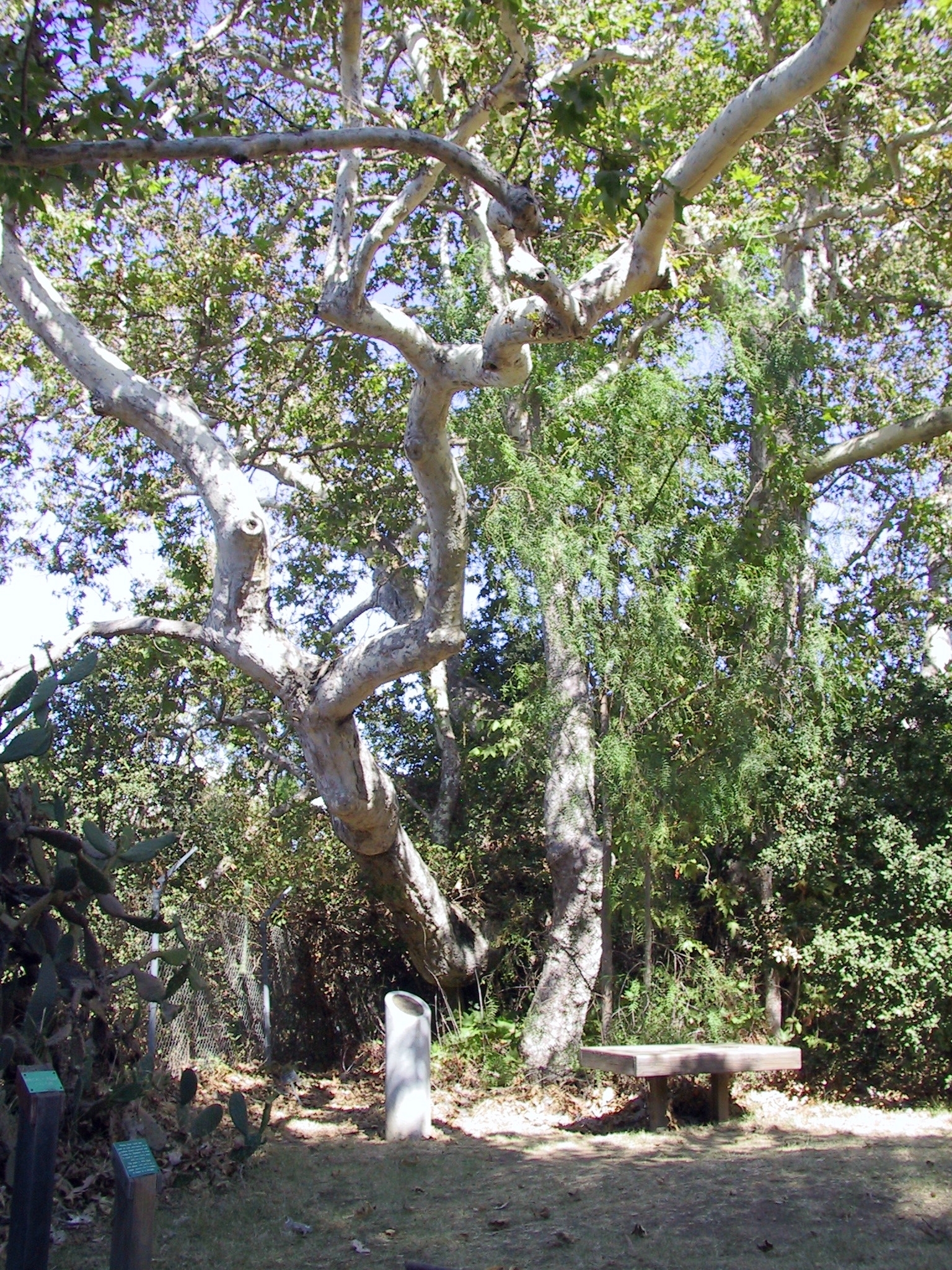
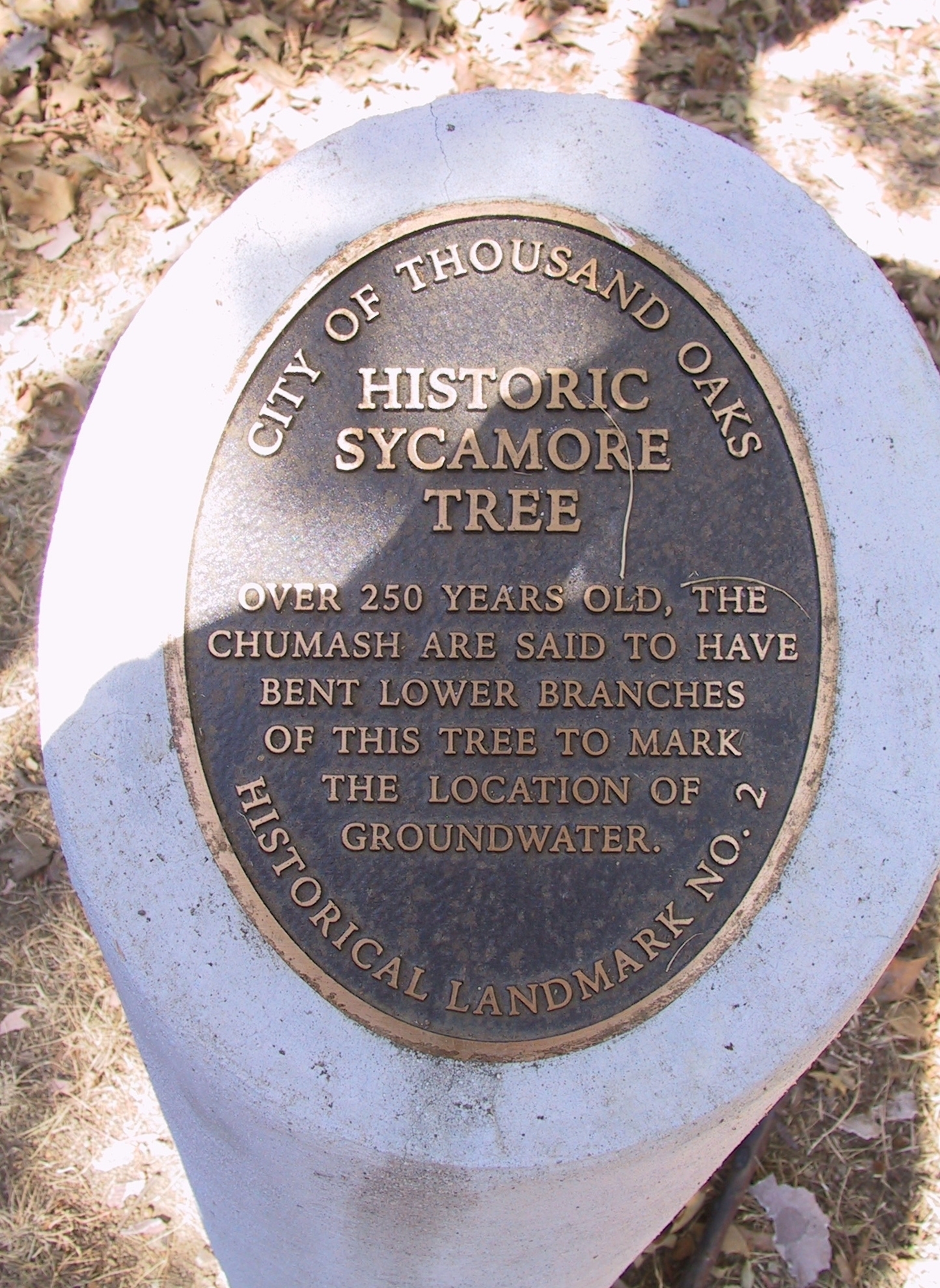
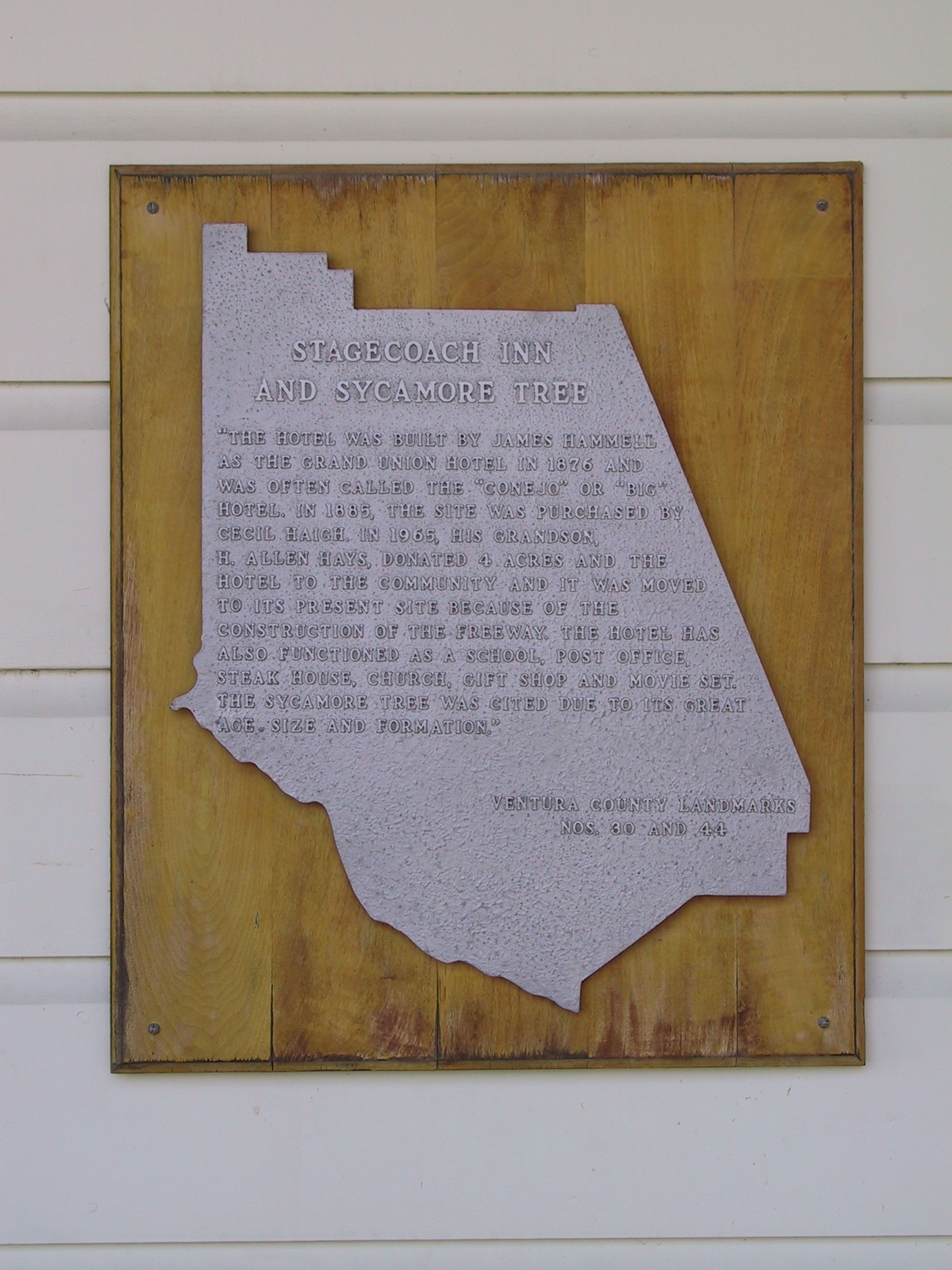
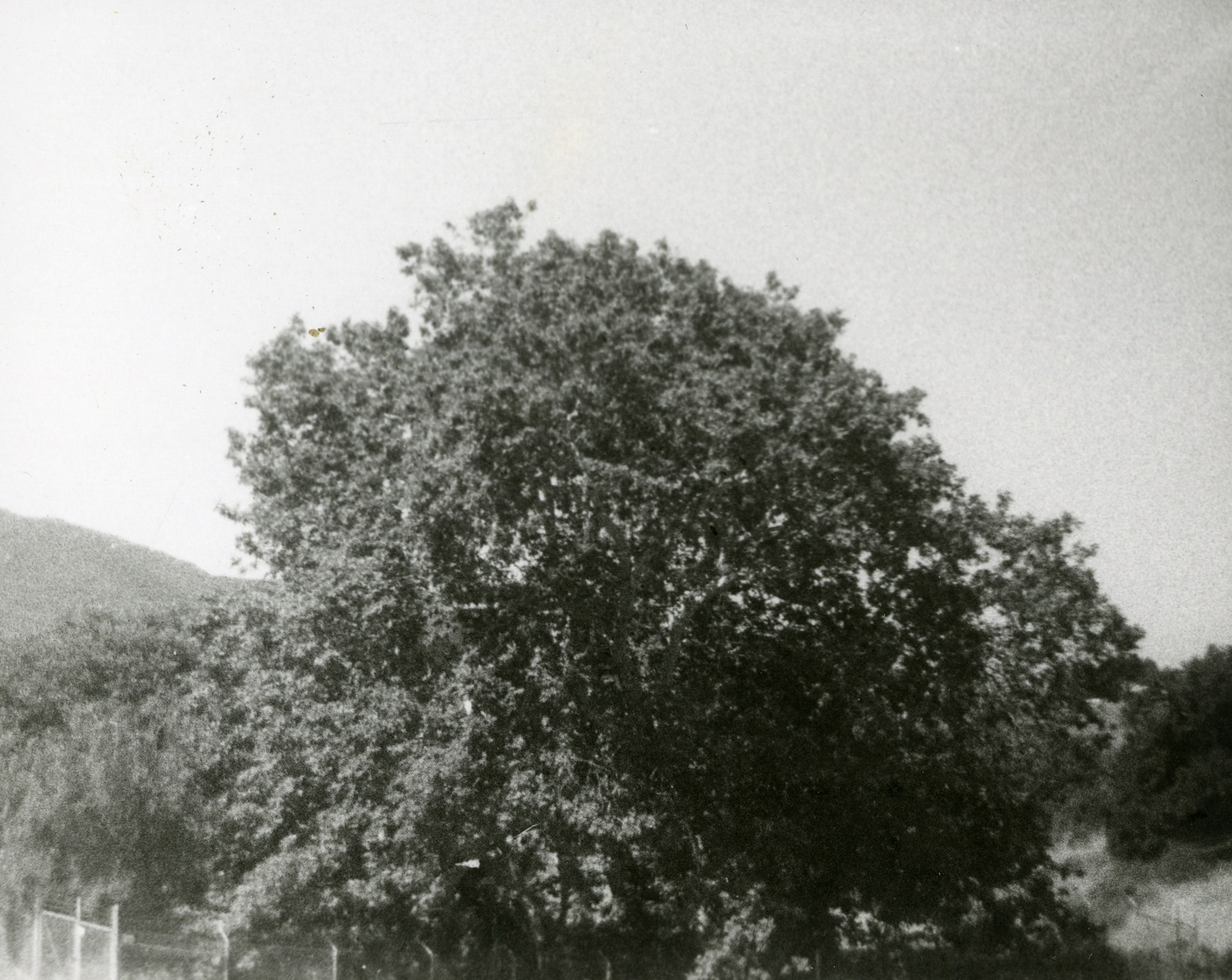
Located along the west side of Ventu Park Road, this unusually large and old specimen of a California native tree was over 150 years old when designated as a Ventura County landmark in 1978. The Chumash Native Americans are said to have bent the lower branches to mark the location of underground water.
Sycamore Trees in California
“The California sycamore can be found in populated areas all across North America, but its native range is in central and southern California, as well as Baja California. They are commonly found in wetlands along streams, in floodplains, and along canyons. This tree prefers unfiltered sunlight for at least 6 hours a day for optimal growth. The California sycamore will grow in acidic, alkaline, loamy, moist, rich, sandy, well-drained and clay soils. Once the tree is well established it is fairly drought tolerant, but if given plenty of water they can grow 30 feet in 5 years.” (University of Redlands, 2023).
“Throughout history the California sycamore was used for a lot more than providing shade for passing pedestrians. Native Americans used the inner bark for food and medicinal tonic, the leaves were used to wrap bread during baking, and its branches were used in house construction.” (University of Redlands, 2023).
“These trees were at one point considered sacred, but in the recent years their natural habitat has been rapidly reduced. Their central California wetland habitat has declined by 90% which not only impairs this tree species but also destroys the habitat of many birds, insects, and mammals. So please enjoy and appreciate this beautiful tree species and its many interesting inhabitants.” (University of Redlands, 2023).
Stagecoach Inn
The original Stagecoach Inn, called the Grand Union Hotel, was built in 1876 at the southwest corner of what is now Ventu Park Road and the Ventura Freeway. The inn, now located near the historic sycamore tree, was moved to its current site in 1965 due to the construction of Highway 101. The inn is a Monterey-style structure of northern California redwood with a wraparound porch and balcony. The original structure functioned as a school, post office, steak house, church, gift shop, and movie set. The four-acre property contains a 200-year-old sycamore tree (Landmark No. 44) and recreations of a carriage house, 3-room pioneer house, blacksmith shop, working windmill, Timber School, Spanish adobe, outdoor beehive oven, and Chumash Native American bulrush hut.
The Conejo Valley Historical Society describes the background of the Inn as follows:
“James Hammell, a contractor in Santa Barbara, and his partner, Asa Adams, a real estate developer, began to acquire land on Rancho El Conejo when property became available for sale in 1874. Within a year, they had purchased over 4,300 acres of land. According to the deed, Asa Adams sold his half-interest to Hammell in November, 1875, for $13,000. During this period of the early development of the Conejo Valley, new settlers were buying property, crops were abundant, and the Coast Line Stage Company ran daily stages through the Valley. In 1875, Newbury Park was recognized as a community by the establishment of a post office, with Egbert Starr Newbury as its postmaster. The only links between other areas to north and south or east and west was by way of an unpaved road later called Ventura Road, another which became Potrero Road leading to what is now California State University Channel Islands , and a third going north through the hills above what is now California Lutheran University.” (Conejo Valley Historical Society, 2017).
“Hammell insisted that only the finest materials be used in the building of his hotel. He had the best redwood lumber available shipped from Northern California to Hueneme. From that port, horses pulled wagon loads of lumber and supplies up the dangerous Conejo Grade to the building site. A carpenter by trade, Hammell probably helped with the construction using square nails. The lumber was on the grounds by May 20, 1876. Advertisements stated that the hotel would be open to the public on July 4, 1876, during the last year of President Ulysses S. Grant’s term of office, the year of Custer’s last stand at the Little Bighorn River, and just in time for the nation’s centennial celebration. The sturdy structure was erected very quickly. The final cost was $7,000.” (Conejo Valley Historical Society, 2017).
Relocation and Restoration
The Conejo Valley Historical Society describes the relocation and restoration of the Inn as follows:
“In the 1960s, the Conejo Valley was entering a tremendous housing boom and there were thousands of new homeowners and a rousing spirit of accomplishing things. H. Allen Hays, intent on saving the hotel from destruction, got together with a few civic leaders, including J. Michael Hagopian, a noted cinematographer, and Guy Runnion, editor of the local paper.” (Conejo Valley Historical Society, 2017).
“This group founded the Conejo Valley Historical Society in 1964, formed in order to save the hotel building. They named it the Stagecoach Inn and were successful in having it declared a California Landmark in 1965. H. Allen Hays, grandson of [previous inn owner] Cecil Haigh, gave the building and about four acres of land at the present location to the Conejo Valley Historical Society, who later deeded the property to the Conejo Recreation and Parks District in return for a 50-year renewable lease to operate the facilities for cultural and educational purposes.” (Conejo Valley Historical Society, 2017).
The inn was moved to its current site in 1965 due to the construction of Highway 101. “After the hotel was moved, community volunteers and the historical society prepared it as a museum. A docent council was formed and tours given.” (Conejo Valley Historical Society, 2017).
“In April of 1970, a fire of undetermined origin completely destroyed the museum and most of its contents. It was rebuilt to appear as it did when it was first constructed. Although the reconstructed museum was dedicated and opened on July 4, 1976, the second floor was not completed until 1980. Since the reconstruction of the Inn, numerous donations have been received from generous and caring community members to furnish and rebuild the museum to its present-day beauty.” (Conejo Valley Historical Society, 2017).
Current Site
The Conejo Valley Historical Society frequently holds meetings and events at the Stagecoach Inn Museum.
Additional Reading
References
Conejo Valley Historical Society (2017). The Stagecoach Inn Museum and Historical Landmark. https://stagecoachinnmuseum.com/stagecoach-inn-detail.
University of Redlands (2023). California Sycamore. https://sites.redlands.edu/trees/species-accounts/california-sycamore/.
Date Designated: June 1978
Location: West side of Ventu Park Road, between Newbury/Lynn Roads, Thousand Oaks
Photos: