ATTENTION:
Citizen Access will be unavailable Thursday, October 9 at 5:00 PM to Monday, October 13 at 6:00 AM for scheduled maintenance and updates.
We apologize for the inconvenience.
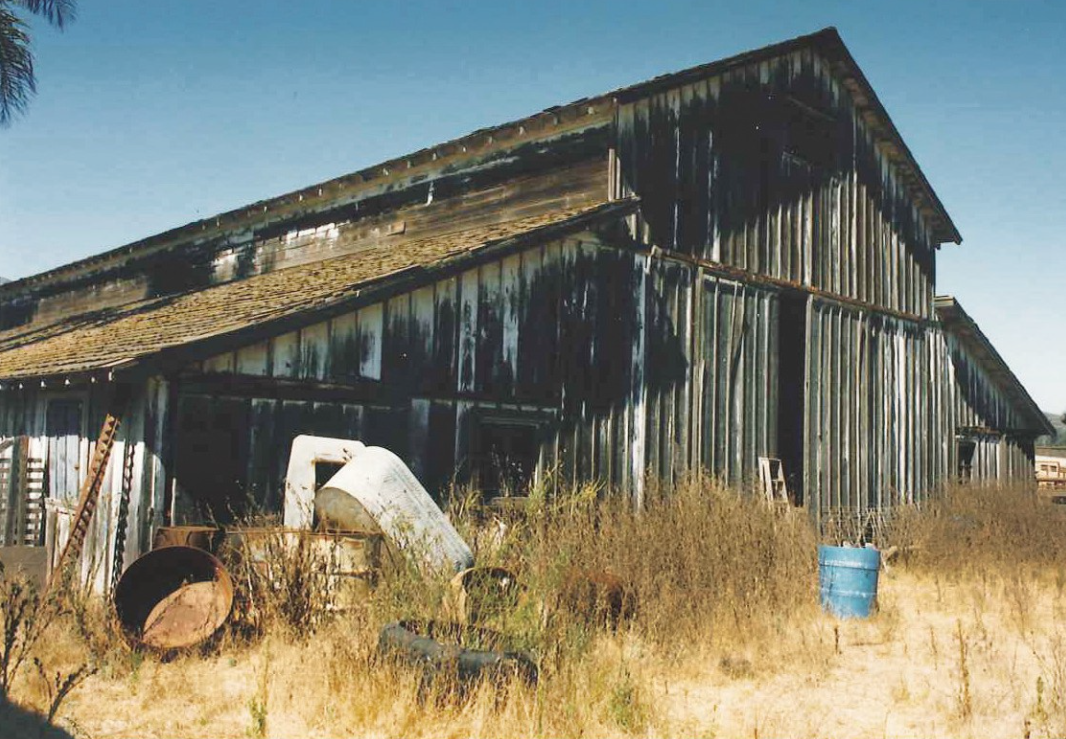
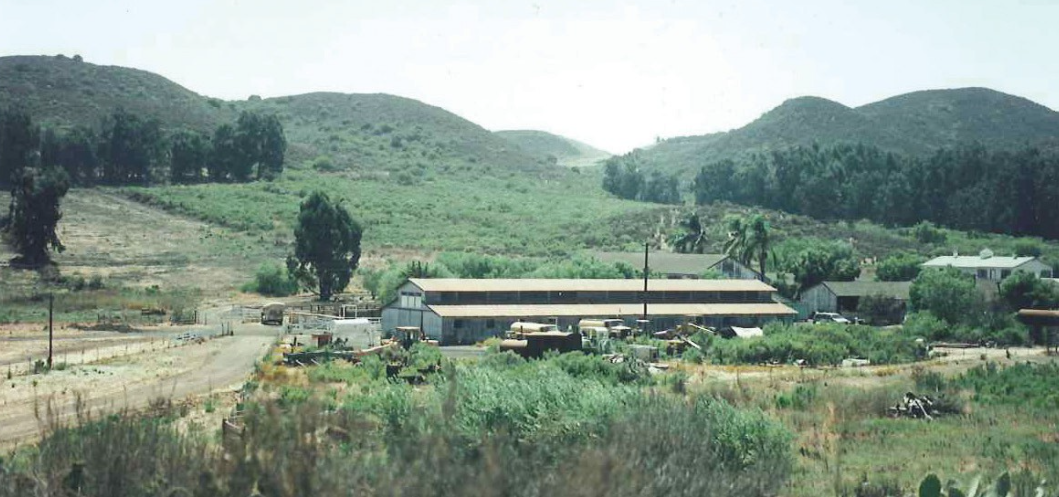
Dos Vientos Ranch barn, circa 1980s. Credit: Conejo Recreation and Park District.
Ventura County Landmark No. 99: Dos Vientos Ranch Buildings (aka Lewis/Clark Ranch)
Historical Background
Dos Vientos Ranch was part of the original 30,593‑acre Rancho Guadalasca land grant given to Isabel Yorba in 1836. By the early 1900s, the ranch had become an important farming area under Joseph Lewis, who farmed about 8,000 acres in partnership with Adolfo Camarillo. Lewis helped establish Ventura County’s lima bean industry, and Camarillo was a well‑known regional rancher and agricultural leader (Bustillo, 1996). Their contributions helped shape the agricultural identity of Dos Vientos Ranch long before the barns were built.
As ranch operations grew, two large livestock barns were added in the 1930s out of necessity to support expanding farming and livestock activities. These barns became central working structures on the property and reflected the continued development of the ranch during that period (Bustillo, 1996).
Property Today
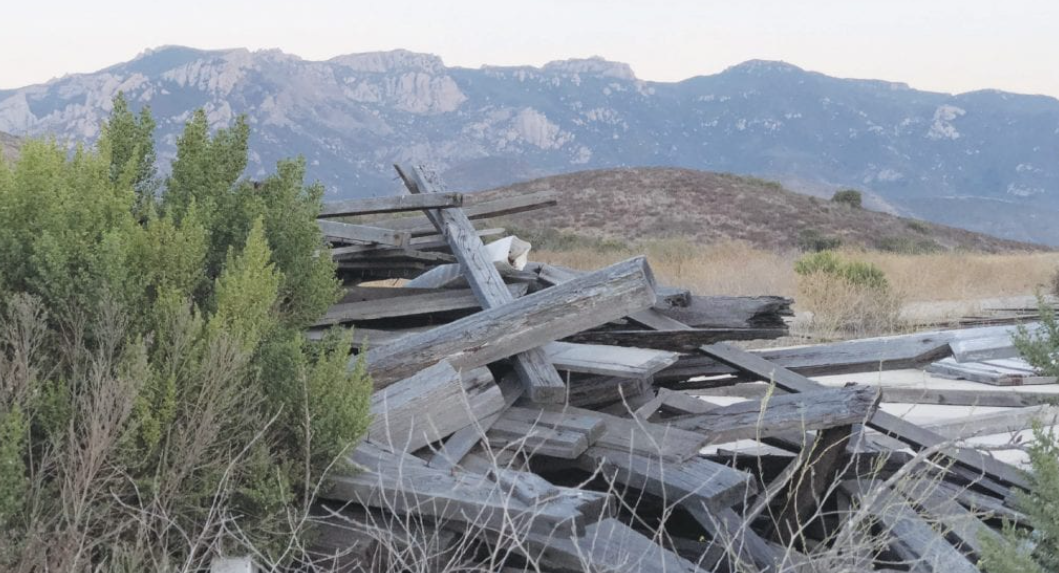
The livestock barns were demolished in 1996 during development of the Dos Vientos master‑planned residential community in Newbury Park. Before demolition, the barns were disassembled and carefully marked piece by piece to allow for relocation and future reconstruction (Terada, 1996). While a final site and future use for the stored wood elements have not been determined, the pieces are currently housed at the Rancho Potrero open‑space area.
Some portions of the barn wood have already been repurposed. Part of the material was used to construct the blacksmith shop at the Stagecoach Inn Museum in Newbury Park, and additional pieces were incorporated into the podium used in the Conejo Recreation and Park District boardroom (Megli‑Thuna, 2018).
Location: In the vicinity of the Rancho Dos Vientos and Via Rincon intersection, Newbury Park
Photos:
Dos Vientos Ranch, circa 1980s. Credit: Conejo Recreation and Park District.
Dos Vientos Ranch barn, circa 1980s. Credit: Conejo Recreation and Park District.
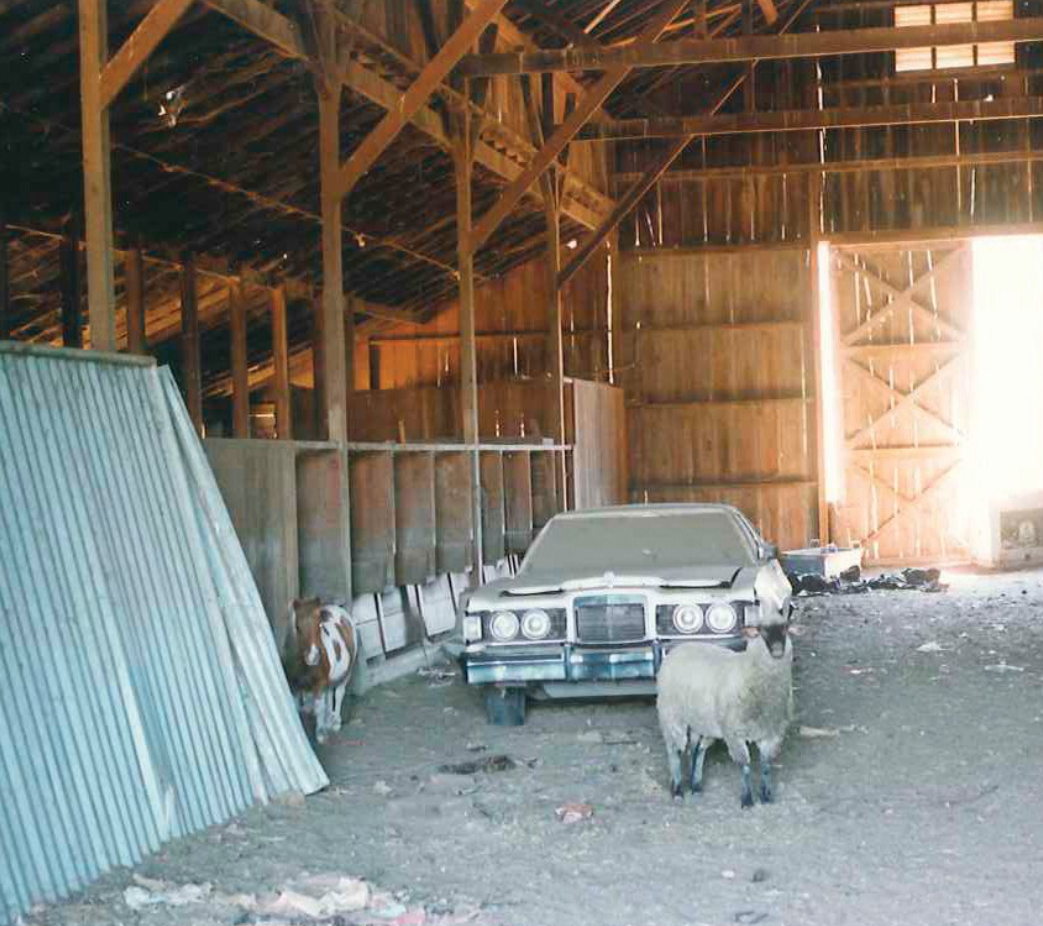
Interior of Dos Vientos Ranch barn, circa 1980s. Credit: Conejo Recreation and Park District.
The pile of wood that remains of the Dos Vientos Ranch Buildings in the Rancho Portrero open space area, 2018. Credit: Dawn Megli-Thuna, Acorn Newspapers.
Translate Disclaimer
The vcrma.org website has been translated for your convenience using translation software powered by Google Translate. Reasonable efforts have been made to provide an accurate translation, however, no automated translation is perfect nor is it intended to replace human translators. Translations are provided as a service to users of the Ventura.org website, and are provided “as is.” No warranty of any kind, either expressed or implied, is made as to the accuracy, reliability, or correctness of any translations made from English into any other language. Some content (such as images, videos, Flash, etc.) may not be accurately translated due to the limitations of the translation software.
The official text is the English version of the website. Any discrepancies or differences created in the translation are not binding and have no legal effect for compliance or enforcement purposes. If any questions arise related to the accuracy of the information contained in the translated website, please refer to the English version of the website which is the official version.