ATTENTION:
Citizen Access will be unavailable Thursday, October 9 at 5:00 PM to Monday, October 13 at 6:00 AM for scheduled maintenance and updates.
We apologize for the inconvenience.
Fillmore’s Southern Pacific Railroad Depot, April 2025. Credit: Google Maps.
Ventura County Landmark No. 48: Southern Pacific Railroad Depot, Fillmore
Historical Background
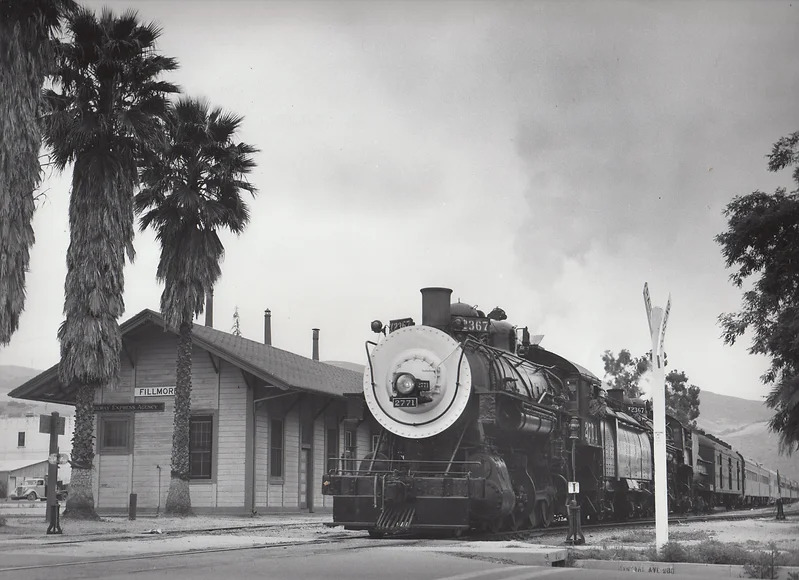
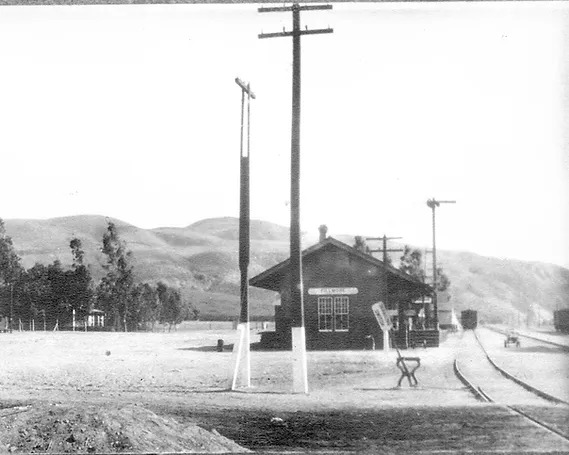
The Fillmore Southern Pacific Railroad Depot was constructed in 1887 as part of the major expansion of the Southern Pacific Rail System (Perzel, 2017). Fillmore’s Southern Pacific Railroad Depot accommodated both freight and passenger service in and out of Ventura County, with a heavy emphasis on the distribution of agricultural goods. The arrival of the railroad transformed life in Ventura County, reshaping transportation, commerce, and settlement patterns across the region. The site was chosen as a midway stop between Saugus and Ventura, and-as was the case in numerous towns across the American West- the railroad played a central role in the development of Fillmore (Perzel, 2017).
The station was built and named after Southern Pacific’s West Coast superintendent, Jerome A. Fillmore, and the town followed in 1888 (Williams, 1991). The stop proved critical in supporting the local citrus and oil industries from 1910-20. The last passenger train pulled out in 1935, but the freight business continued, at one time occupying four full-time employees (Williams, 1991).
Thirteen other depots were constructed throughout Ventura County at the following locations: Oxnard, Santa Susana, Fillmore, Piru, Ojai, Camarillo, Moorpark, Sespe, Camulos, Somis, Saticoy, Montalvo, and downtown Ventura (Perzel, 2017). Of the fourteen Southern Pacific Railroad Depots once located in Ventura County, only a few remain, including the one in Fillmore (Perzel, 2017).
Relocation and Rehabilitation
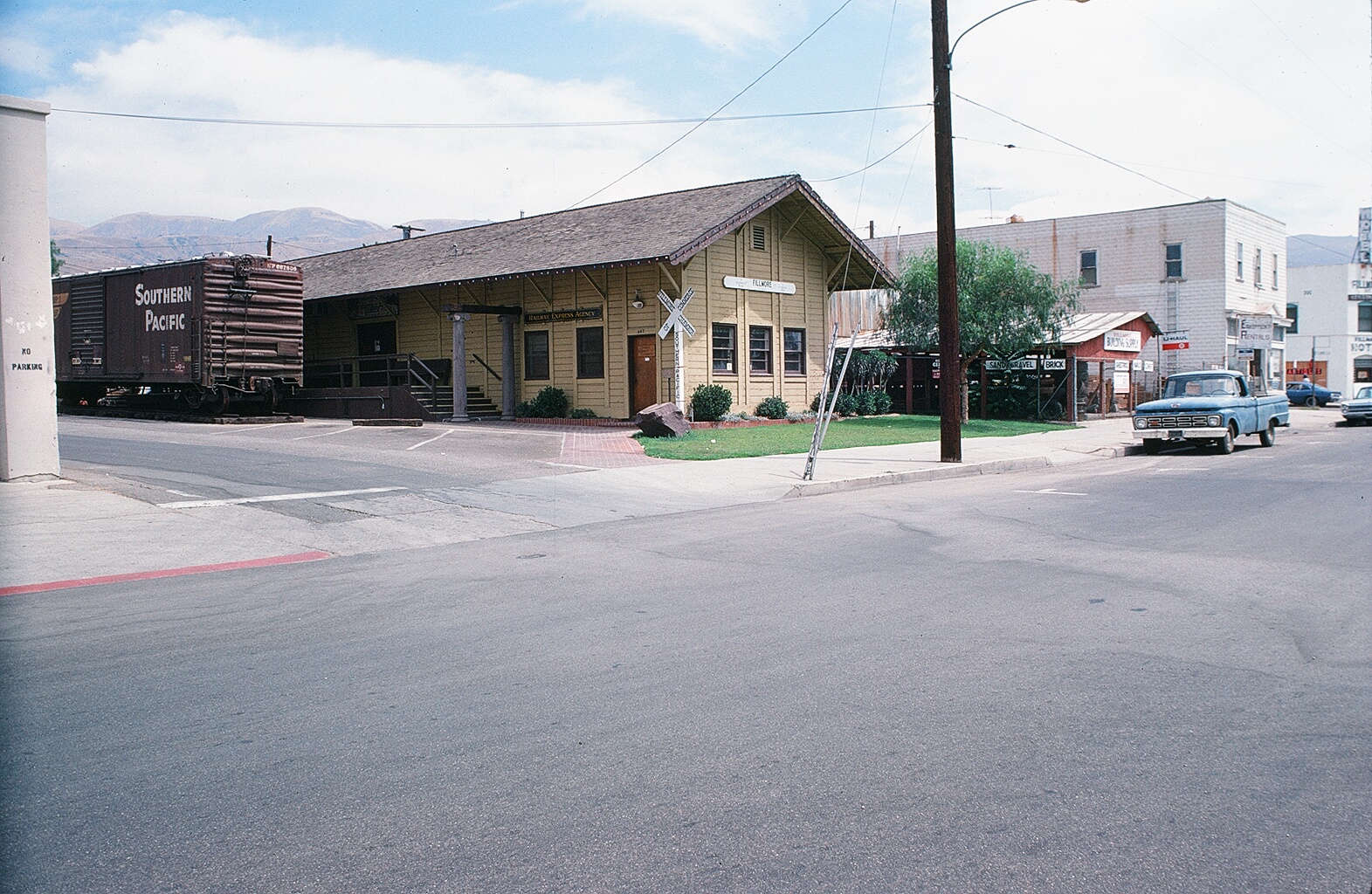
When the building faced the prospect of demolition in 1974, Edith Moore Jarrett Roderick Brown bought the Southern Pacific depot for $1 plus 5 cents tax (Fillmore Historical Museum, 2020). It was moved from the Southern Pacific right of way to the north side of Main Street near the former fire station, where it became the home of the Fillmore Historical Museum. When more space was needed, Edith purchased a boxcar and filled it with railroad artifacts (Fillmore Historical Museum, 2020). A pair of Sespe sandstone Ionic columns salvaged from the first Fillmore State Bank stood at the entranceway.
In 1994, the Northridge Earthquake severely damaged the buildings and items in the collection (Fillmore Historical Museum, 2020). Museum volunteers rose to the challenge and, working with the City of Fillmore, the depot and boxcar were moved to the south side of Main Street (Fillmore Historical Museum, 2020). The Corl family donated the small bungalow home of Dr. Ira Hinckley and his wife, while Kate and James P. Finch donated bunkhouse #2 from Rancho Sespe. The museum moved both structures and restored them. Within ten years, the Fillmore Historical Museum had grown into a full Historical Park (Fillmore Historical Museum, 2020). Today, this prefabricated railroad building is located near its original site along the railroad tracks, updated to meet current building codes and featuring improvements such as a loading dock, upgraded electrical wiring, and steel beams (Richard, 2007).
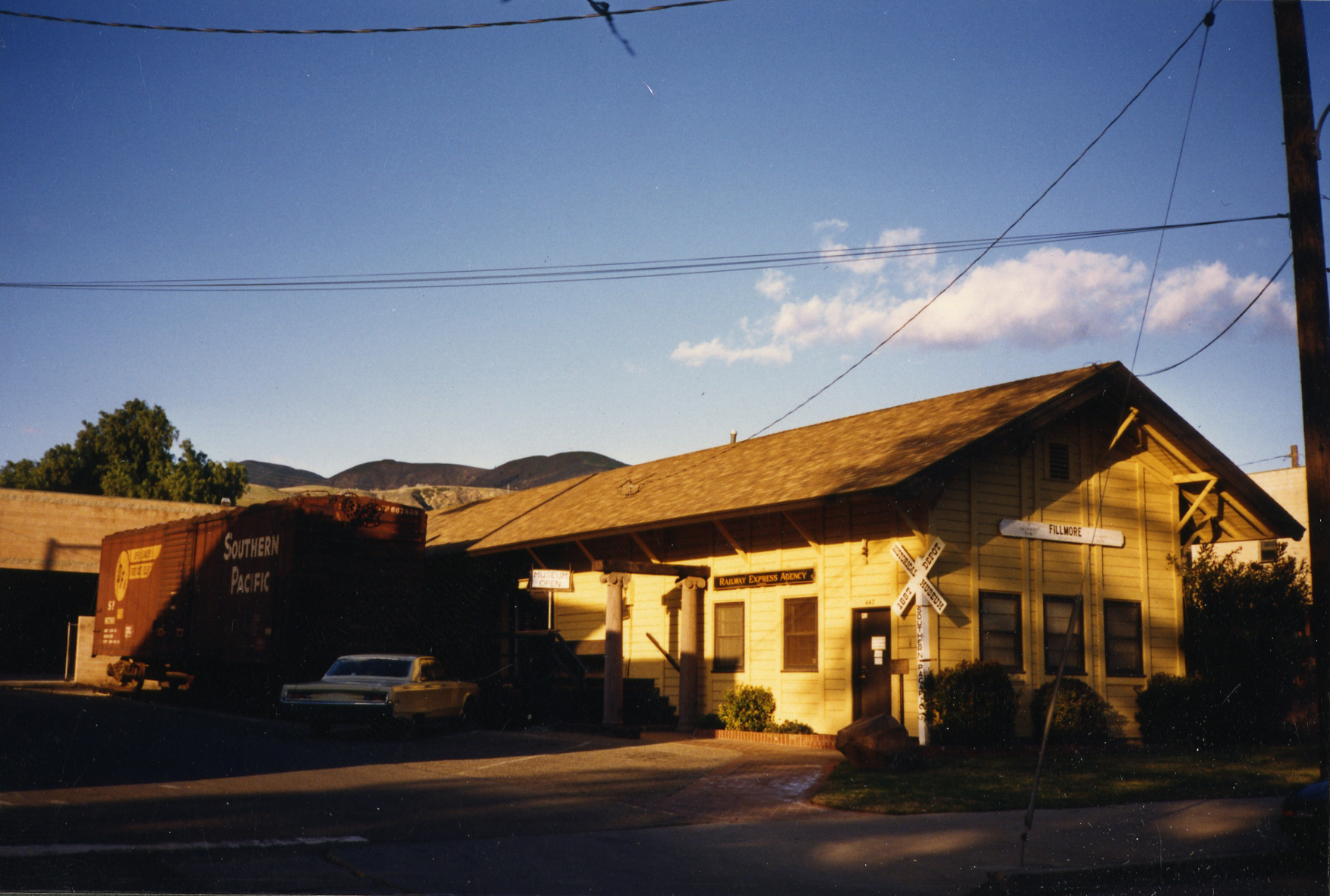
Fillmore’s Southern Pacific Railroad Depot after it was relocated in the 1970s and prior to its current location.
Fillmore’s Southern Pacific Railroad Depot after it was relocated, circa 1980s.
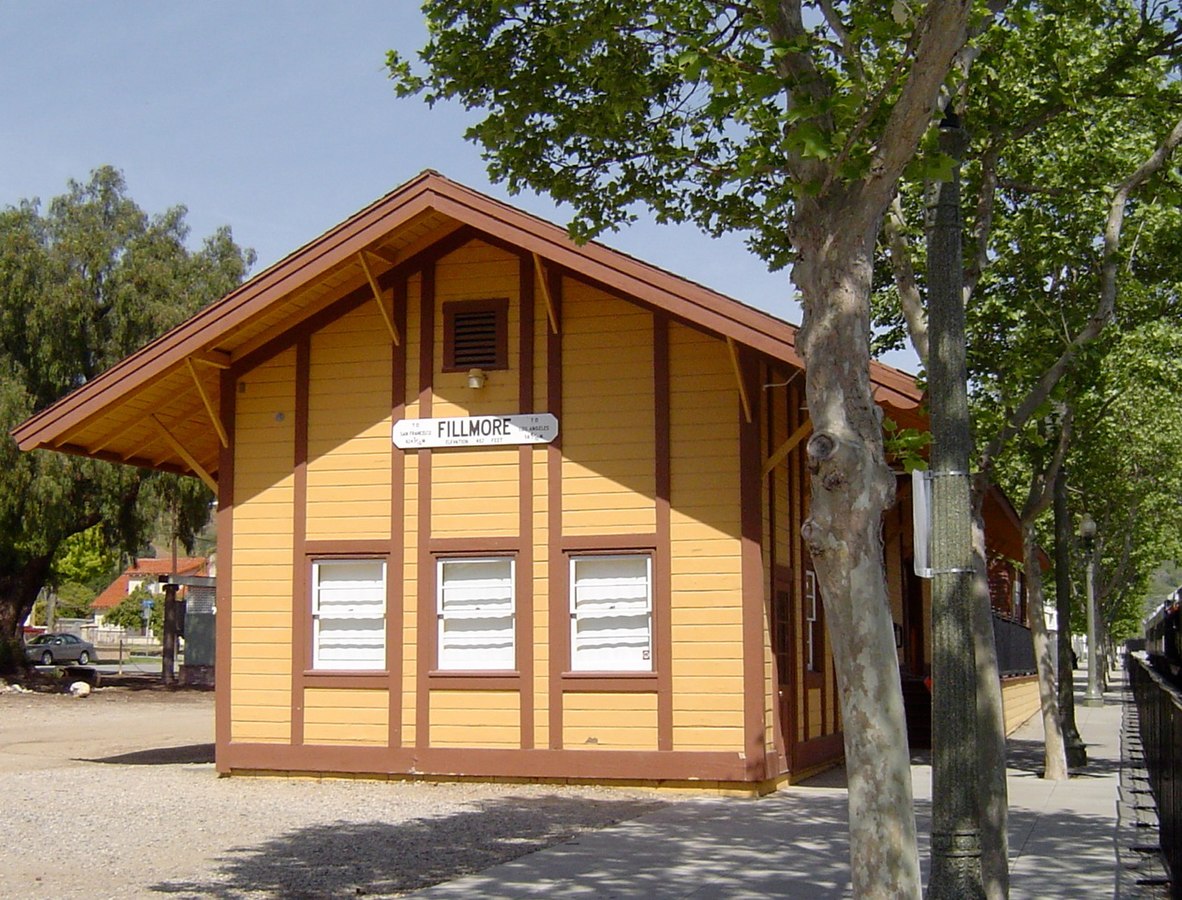
Fillmore’s Southern Pacific Railroad Depot in its current location along the railroad tracks, 2016. Credit: Fillmore Historical Museum, CC BY-SA 4.0
Translate Disclaimer
The vcrma.org website has been translated for your convenience using translation software powered by Google Translate. Reasonable efforts have been made to provide an accurate translation, however, no automated translation is perfect nor is it intended to replace human translators. Translations are provided as a service to users of the Ventura.org website, and are provided “as is.” No warranty of any kind, either expressed or implied, is made as to the accuracy, reliability, or correctness of any translations made from English into any other language. Some content (such as images, videos, Flash, etc.) may not be accurately translated due to the limitations of the translation software.
The official text is the English version of the website. Any discrepancies or differences created in the translation are not binding and have no legal effect for compliance or enforcement purposes. If any questions arise related to the accuracy of the information contained in the translated website, please refer to the English version of the website which is the official version.