ATTENTION: Citizen Access will be unavailable Thursday, October 9 at 5:00 PM to Monday, October 13 at 6:00 AM for scheduled maintenance and updates. We apologize for the inconvenience.
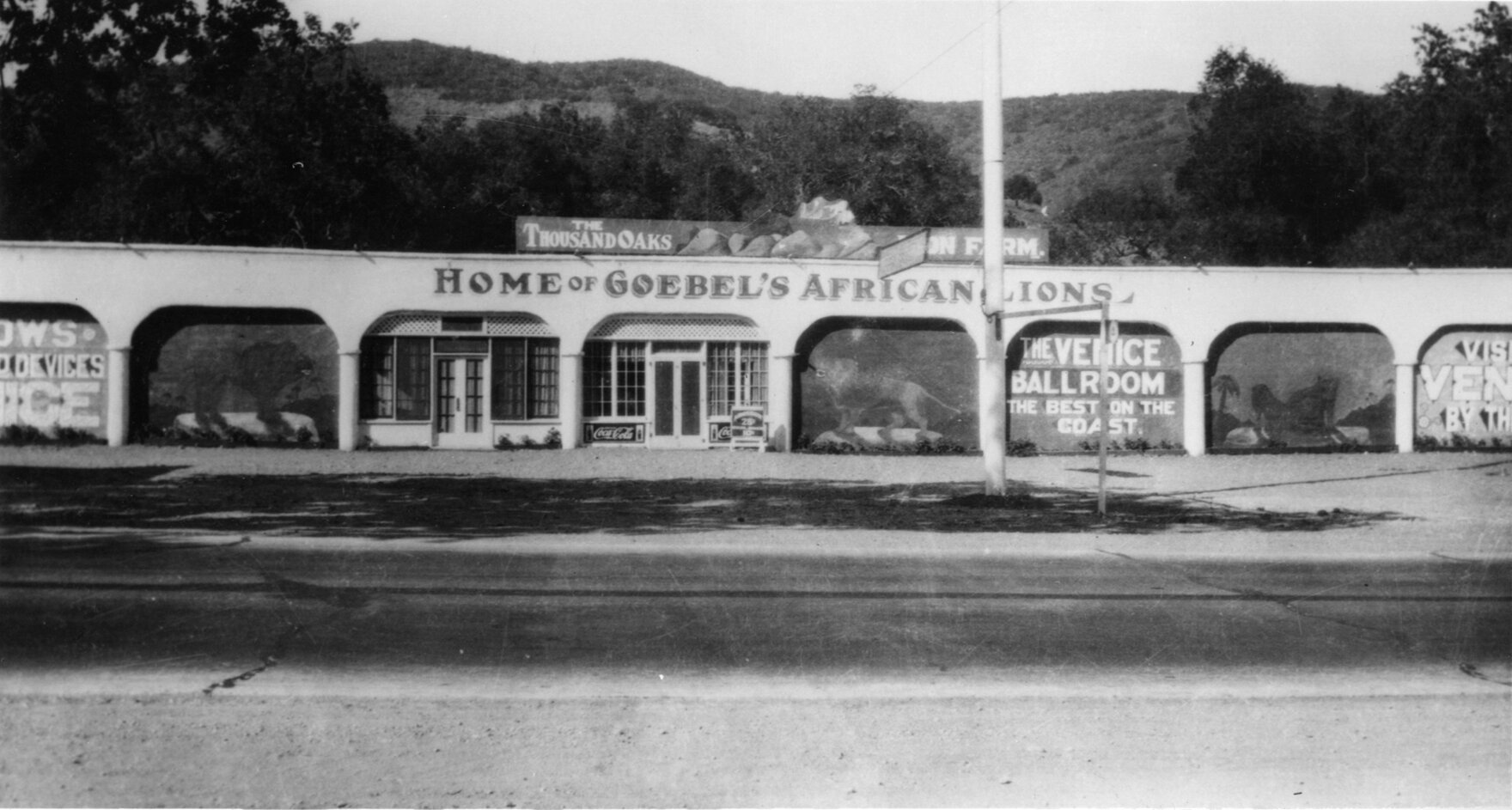
Black-and-white photograph of Goebel's Lion Farm building, circa 1929, featuring arched openings with visible text including "HOME OF GOEBEL'S AFRICAN LIONS" and "THE VENICE BALLROOM", set against a hilly landscape.
Goebel's Lion Farm Site, circa 1929. Credit: Thousand Oaks Library via Conejo Valley Guide.

Ventura County Landmark No. 63: Goebel's Lion Farm Site (aka Jungleland)

Historical Background

Today, the Thousand Oaks Civic Arts Plaza is located on the former site of Goebel’s Lion Farm Site (aka Jungleland). After acquiring the property in 1925, Louis and Kathleen Goebel opened Goebel’s Lion Farm, where they trained lions and rented them to movie studios. As travelers passed through town, they wanted to see the animals. Louis Goebel capitalized on this in 1929, when the site became “Goebel’s Wild Animal Farm,” a theme park that became very popular in the 1940s and 1950s. The 170-acre site housed all sorts of animals, including elephants, tigers, giraffes, hippos, chimpanzees, and more. Additionally, many TV shows and movies were filmed there, such as Tarzan, The Adventures of Robin Hood, and Birth of a Nation. (Conejo Valley Guide, 2023).

Goebel’s Wild Animal Farm was home to Leo the Lion of MGM Pictures fame. Over the years, other animal celebrity residents included Mr. Ed, the talking horse, Bimbo, the elephant from Circus Boy and Tamba, the chimpanzee in Tarzan films and Bedtime with Bonzo, starring Ronald Reagan and Diana Lynn. (Conejo Valley Guide, 2023).

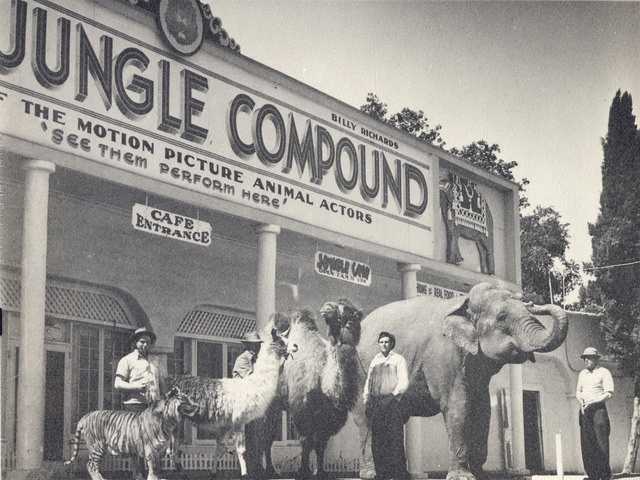
Goebel sold Jungleland in 1946 and the park was renamed the “World Jungle Compound.” Ten years later it was sold again to executives from 20th Century Fox and was renamed “Jungleland.” After five years, the business slid and Goebel was able to purchase it back in 1961. (Conejo Valley Guide, 2023).

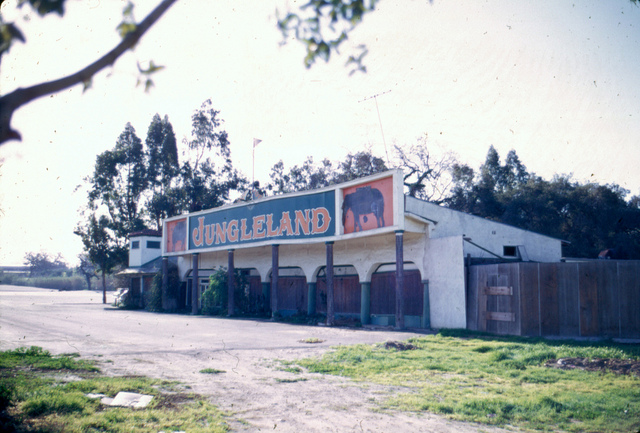
Jungleland closed in October 1969 after its popularity continued to drop – a combination of increased competition (Disneyland, Knotts Berry Farm, Universal Studios, etc.) and the fact that Highway 101 diverted drivers around the theme park. The park operated for 43 years and its 1,800 animal occupants were sold at auction. (Conejo Valley Guide, 2023).

Additional Reading

References

Conejo Valley Guide (February 11, 2023). The Story of Jungleland in Thousand Oaks. https://www.conejovalleyguide.com/welcome/the-story-of-jungleland-in-thousand-oaks.

Date Designated: March 1981

Location: Corner of Conejo School Road and Thousand Oaks Boulevard, Thousand Oaks

Photos:

Black-and-white historical photo of the Jungle Compound (1946-1955 renamed World Jungle Compound) showing animals including an elephant, camels, and a zebra in front of a building with signs for "JUNGLE COMPOUND" and "SEE THEM PERFORM HERE".
From 1946 to 1955 the tourist destination was called the "World Jungle Compound.” Credit: Thousand Oaks Library via Conejo Valley Guide.
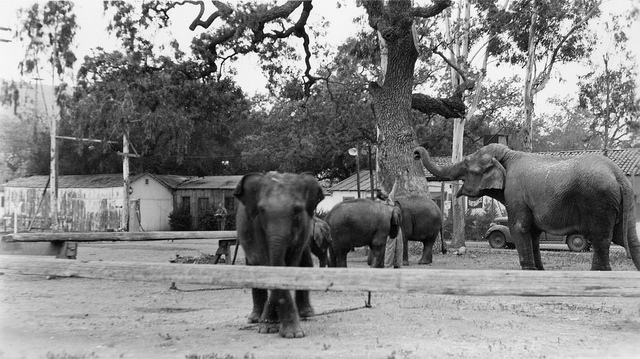
Black-and-white photograph of multiple elephants in an outdoor enclosure at Goebel's Lion Farm Site, with trees, buildings, and a vehicle visible in the background.
Elephants at Goebel's Lion Farm Site. Credit: Thousand Oaks Library via Conejo Valley Guide.
Closed Jungleland theme park sign with orange "JUNGLELAND" text on green background, featuring elephant illustrations above a white building with brown doors, surrounded by trees and a fence.
Jungleland sign after the theme park closed in 1969. Credit: Thousand Oaks Library via Conejo Valley Guide.
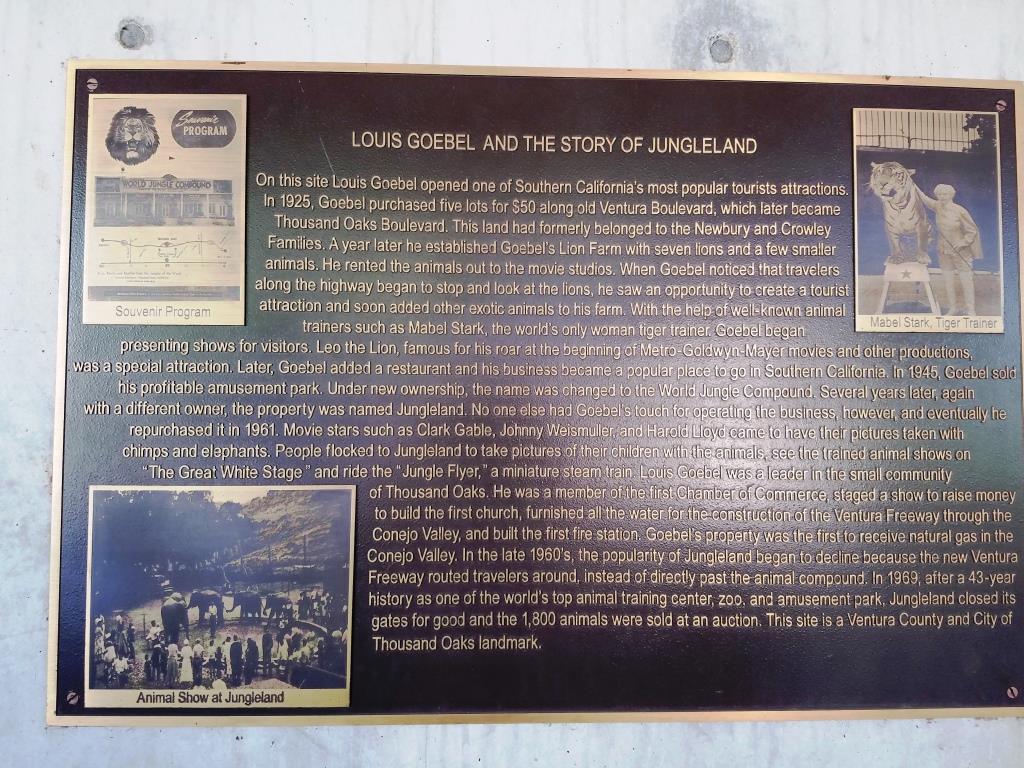
Commemorative plaque detailing Louis Goebel's Jungleland history, featuring text on its founding, attractions, and closure, alongside three photographs: a souvenir program, an animal show, and a tiger trainer. Located outside Civic Arts Plaza, credited to Conejo Valley Guide.
Louis Goebel and Jungleland plaque outside the Civic Arts Plaza. Credit: Conejo Valley Guide.

Translate Disclaimer

The vcrma.org website has been translated for your convenience using translation software powered by Google Translate. Reasonable efforts have been made to provide an accurate translation, however, no automated translation is perfect nor is it intended to replace human translators. Translations are provided as a service to users of the Ventura.org website, and are provided “as is.” No warranty of any kind, either expressed or implied, is made as to the accuracy, reliability, or correctness of any translations made from English into any other language. Some content (such as images, videos, Flash, etc.) may not be accurately translated due to the limitations of the translation software.

The official text is the English version of the website. Any discrepancies or differences created in the translation are not binding and have no legal effect for compliance or enforcement purposes. If any questions arise related to the accuracy of the information contained in the translated website, please refer to the English version of the website which is the official version.