ATTENTION:
Citizen Access will be unavailable Thursday, October 9 at 5:00 PM to Monday, October 13 at 6:00 AM for scheduled maintenance and updates.
We apologize for the inconvenience.
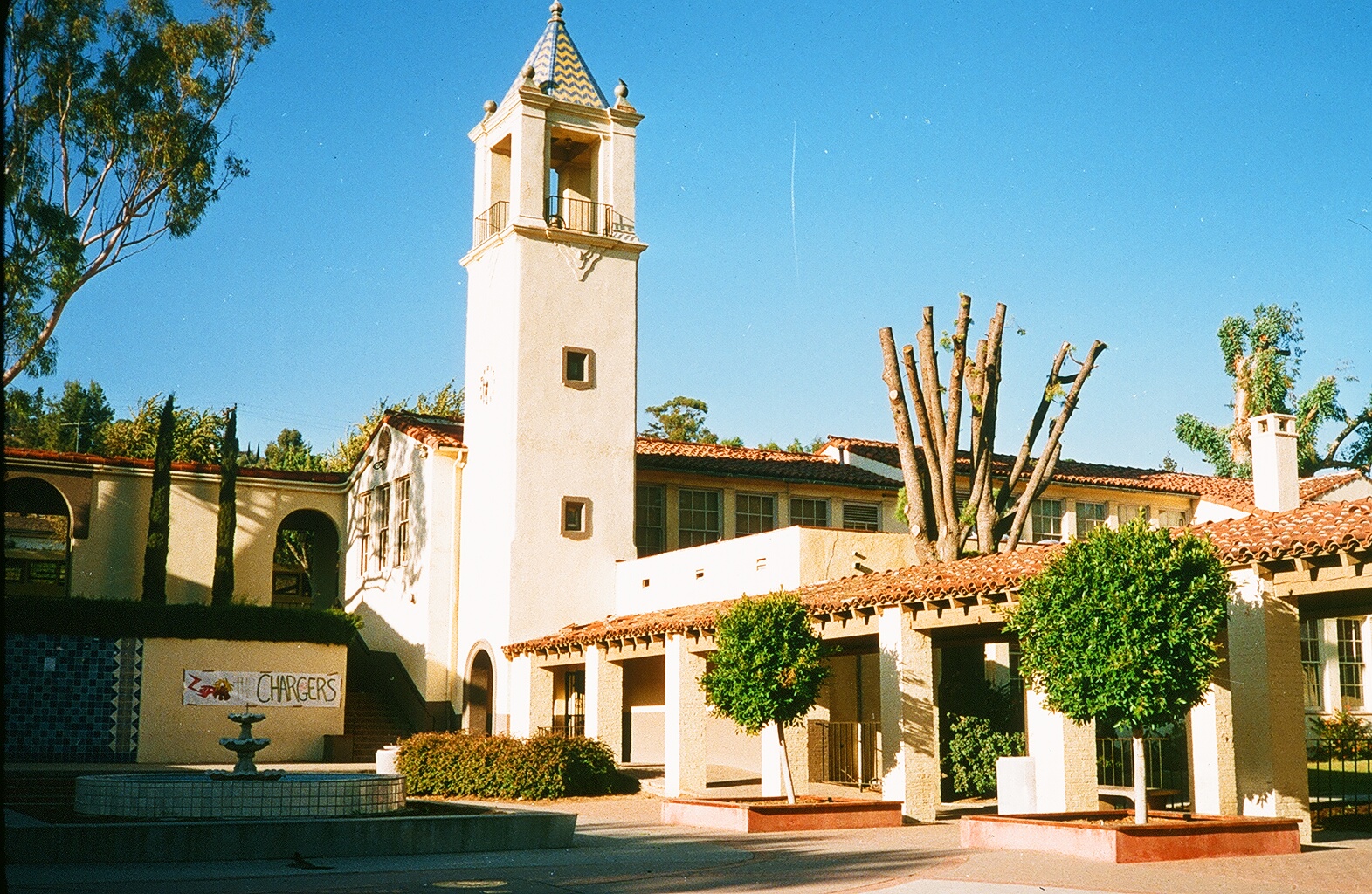
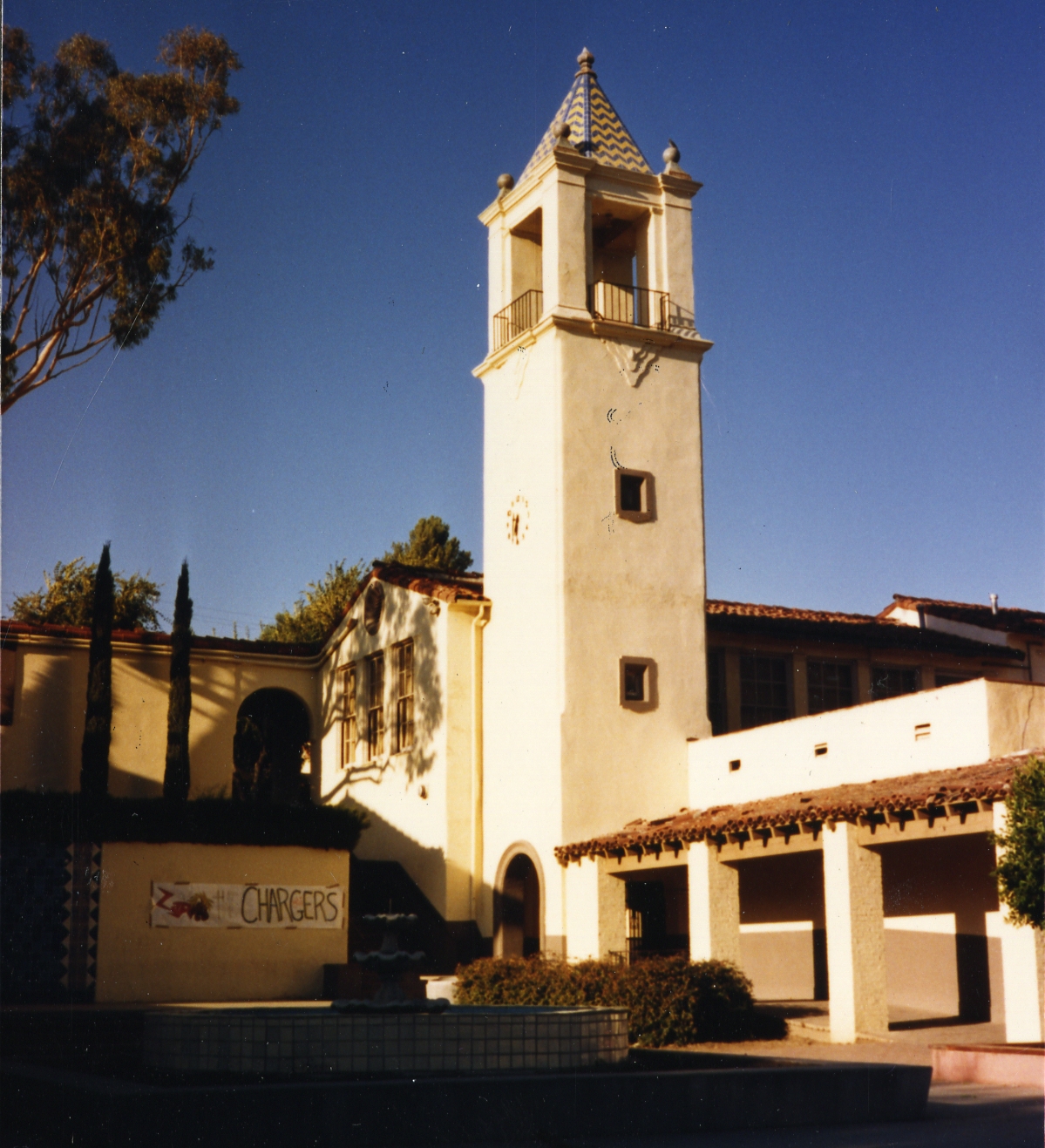
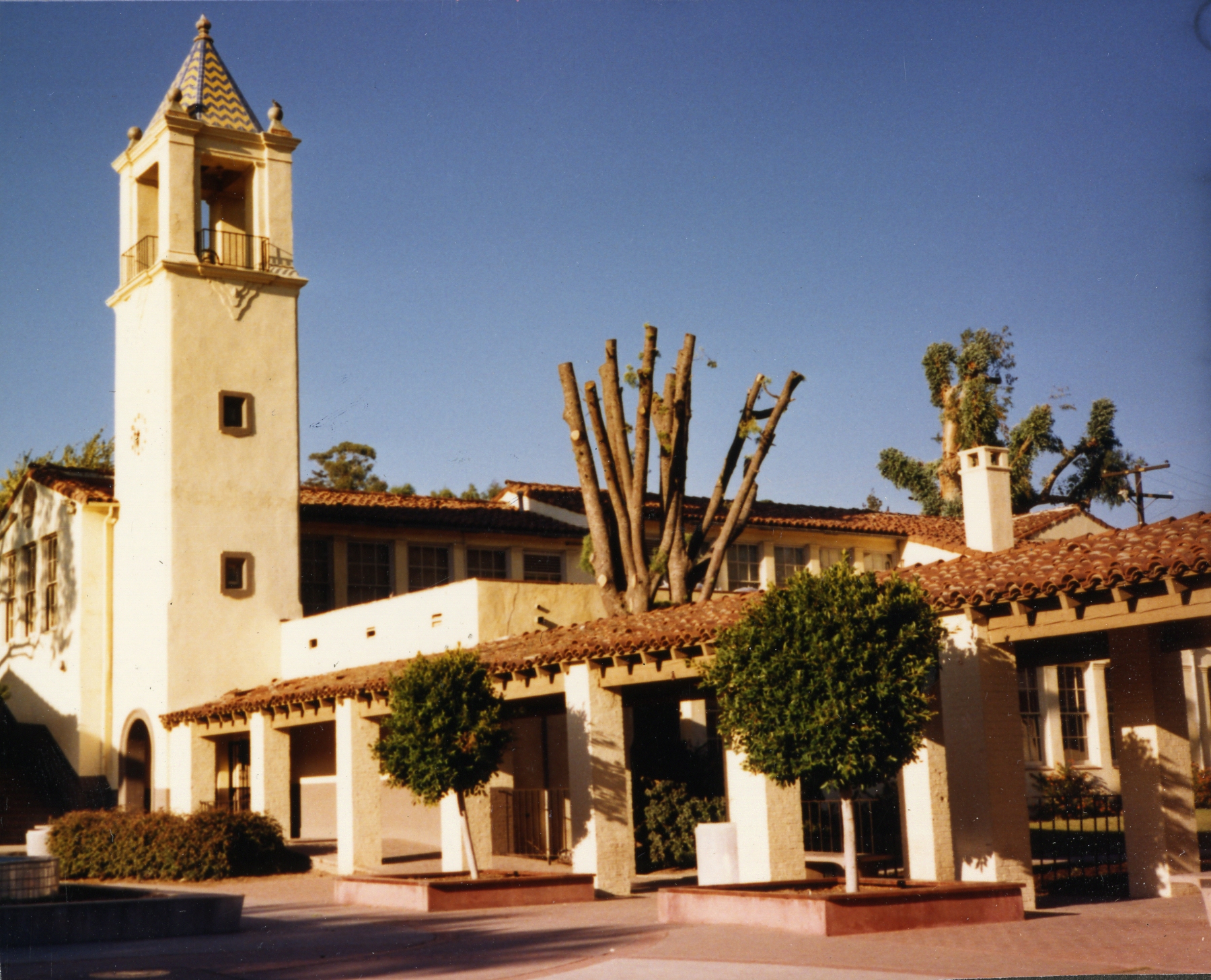
Santa Paula Union High School, 1985.
Ventura County Landmark No. 97: Santa Paula Union High School
Historical Background
Santa Paula Academy, a private school founded in 1889, was deeded to Santa Paula Union High School—then newly established as a public institution—in 1891. The campus buildings were constructed during the Works Progress Administration era in 1936 and arranged around a central court featuring four interior courtyards and a prominent tower. Architect Frederick Hunt Kennedy Jr., certified to practice in California in 1916 and known for his educational and civic commissions, designed the complex (Ventura County Resource Management Agency, 2016).
Spanish Colonial Revival Style
Spanish Colonial Revival architecture became widely popular in California during the 1920s and 1930s, evolving from earlier efforts to create a regional style inspired by Mission period buildings across the Southwest. This tradition grew out of the Mission Revival style of the late nineteenth and early twentieth centuries and developed into a more expressive architectural language (Ventura County Resource Management Agency, 2016).
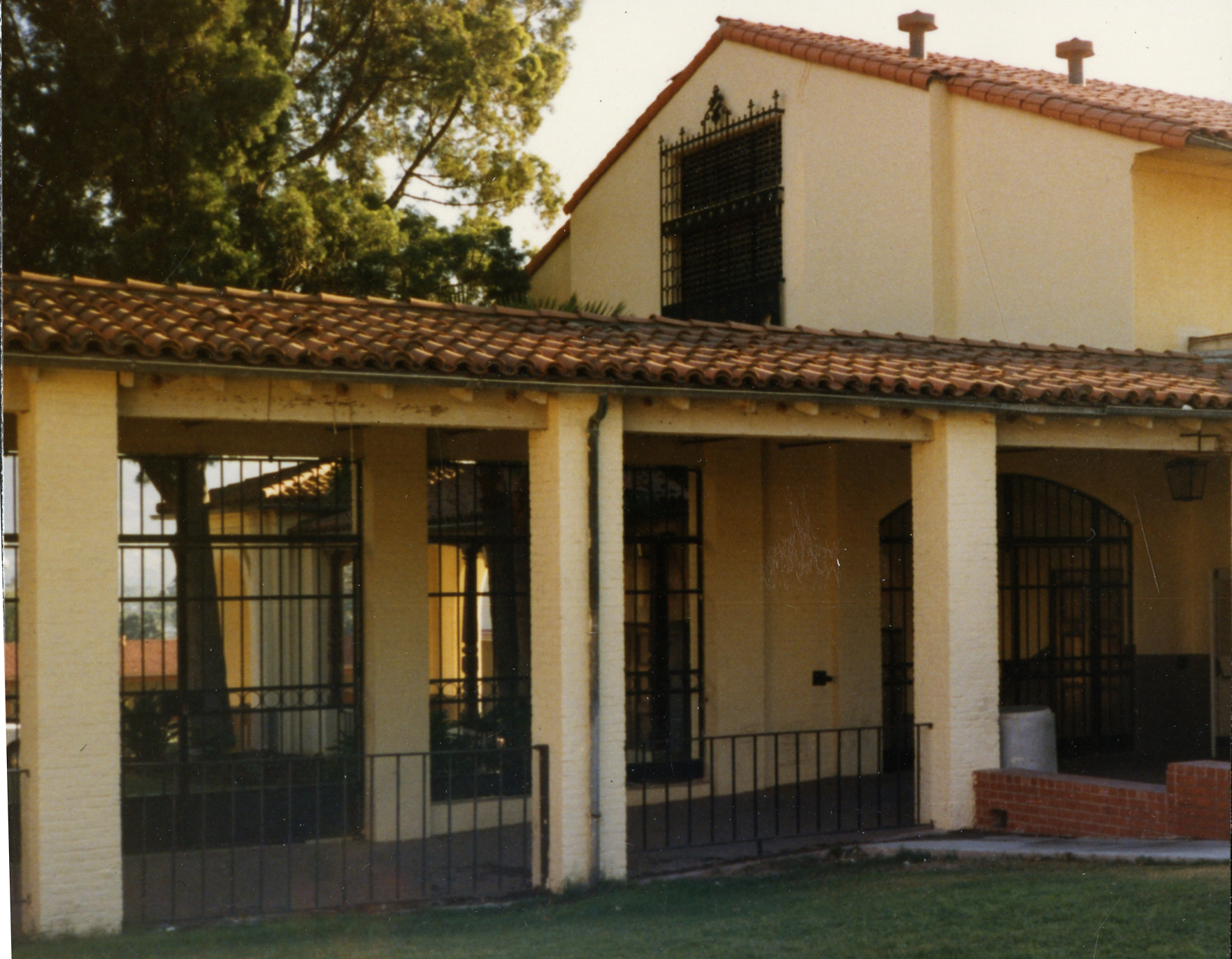
Buildings in this style typically use traditional materials such as plaster, stucco, wood, and terra cotta, combined with decorative elements ranging from simple to ornate. Smooth, uninterrupted wall surfaces give each structure a strong visual presence, and openings are often placed asymmetrically to enhance balance. The style also emphasizes harmonious building forms that distinguish practical service areas from more formal rooms intended for living, gathering, or public use (Ventura County Resource Management Agency, 2016).
Property Today
Santa Paula Union High School remains an architecturally and culturally significant landmark within Ventura County. Its preserved Works Progress Administration–era Spanish Colonial Revival buildings—including the tower, courtyards, and traditional stucco surfaces—continue to reflect Frederick Hunt Kennedy Jr.’s design vision. The campus retains its designation as Ventura County Historical Landmark No. 97 and continues to serve as an important educational and community resource (Ventura County Resource Management Agency, 2016).
The vcrma.org website has been translated for your convenience using translation software powered by Google Translate. Reasonable efforts have been made to provide an accurate translation, however, no automated translation is perfect nor is it intended to replace human translators. Translations are provided as a service to users of the Ventura.org website, and are provided “as is.” No warranty of any kind, either expressed or implied, is made as to the accuracy, reliability, or correctness of any translations made from English into any other language. Some content (such as images, videos, Flash, etc.) may not be accurately translated due to the limitations of the translation software.
The official text is the English version of the website. Any discrepancies or differences created in the translation are not binding and have no legal effect for compliance or enforcement purposes. If any questions arise related to the accuracy of the information contained in the translated website, please refer to the English version of the website which is the official version.